Travel to Jordan
Day 1 Amman
Amman: Amman, the capital of Jordan, is a vibrant and modern city that combines rich ancient history with contemporary development. Located on a series of hills, Amman is known for its numerous archaeological sites, such as the Citadel and the Roman Theatre, which offer a glimpse into the Roman and Byzantine past. The city is a melting pot of cultures and traditions, with bustling markets, such as Souk Jara, and a thriving food scene that fuses local and modern flavours. Its well-developed infrastructure and welcoming atmosphere make Amman an ideal base for exploring other Jordanian treasures, such as Petra and the Dead Sea. The mix of old and new, along with its Jordanian hospitality, makes Amman a fascinating destination for any traveller.

Amman - Historic centre
We start our tour of the city from the Roman Theatre, located a few metres from our hotel. It was built in the 2nd century AD, when the city of Amman was known as Philadelphia. Able to hold up to 6,000 spectators, it is built on a hillside to protect the audience from the sun. The theatre is organised on three levels, with several side entrances to facilitate the flow of people. Its excellent acoustics allow for concerts and ceremonies, taking advantage of its ancient design. It also offers panoramic views of Amman from the upper tiers. Admission is 2 JOD and is included in the Jordan Pass, which also allows access to the nearby Odeon and the Folklore and Folk Traditions museums.

Amman - Roman Theater
The Roman Odeon in Amman, located like the Roman Theatre in Hashemite Square, is a smaller, cosier structure dating from the 2nd century AD. This small theatre, which seats 500 spectators in nine rows of seats, was mainly used for musical performances and intimate gatherings. The stage area was often richly decorated with friezes and niches. Archaeologists have speculated that, in ancient times, the Odeon was probably enclosed by a temporary wooden roof that protected the audience from the weather.

Amman - Odeon
The Nymphaeum of Amman is an impressive Roman-era monumental fountain located in the heart of the Jordanian capital, directly opposite the Souq Al-Sukar. Built in the 2nd century AD, this majestic building was an integral part of the water network of ancient Philadelphia. The nymphaeum, dedicated to the water nymphs, is notable for its elegant architecture, with decorated niches and sculptures that once adorned its walls. Although much of its original splendour has been lost over time, the present ruins remain a fascinating testament to the ingenuity and skill of Roman engineers. From here you can view one of the huge street art murals that decorate the walls of some of the city's buildings.
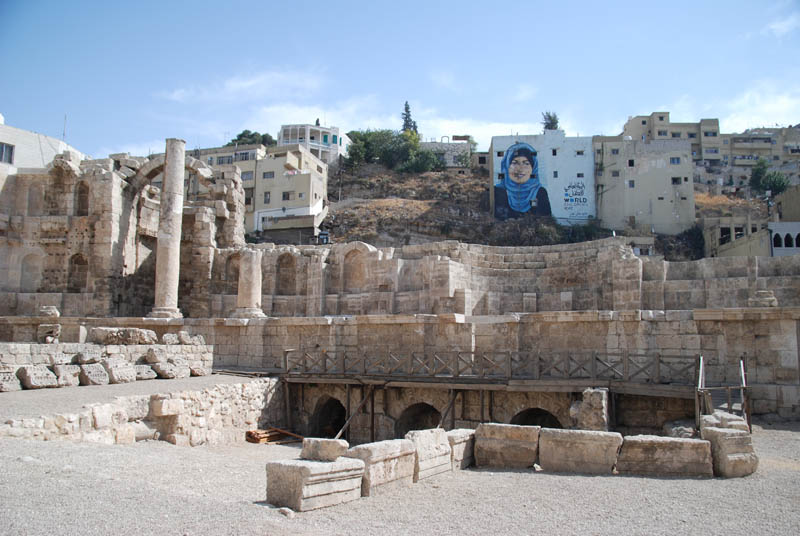
Amman - Nymphaeum
At midday we move on to Rainbow Street, located in a vibrant neighbourhood known for its historic charm and lively cultural life. With its cobbled streets and buildings of Ottoman architecture, this place has become a meeting point for locals and tourists alike. Filled with cafes, restaurants and artisan shops, it offers a bohemian and cosmopolitan atmosphere. It is famous for its panoramic views of the city and for its nightlife, with numerous bars and cultural events. Rainbow Street is also home to the Al-Balad Cultural Centre, which hosts exhibitions and art events. We were a little disappointed by this place, so we decided to return to the bustling centre in search of a place to eat. On the recommendation of other travellers, we ate at Hashem, a simple and very inexpensive place that stands out for its hummus and falafel.

Temple of Hercules at the Amman Citadel
In the afternoon, we climbed the Citadel Hill (Jabal al-Qala). The Citadel of Amman is a fascinating testament to Jordan's ancient history. This site has been occupied since the Bronze Age, witnessing civilisations such as the Romans, Byzantines, Abbasids and Umayyads, among others. Beginning with the Temple of Hercules, a Roman structure dating from the 2nd century AD, its imposing Corinthian columns once formed part of a temple dedicated to the mythological hero. Continuing the tour, the Umayyad Palace, built in the 8th century, displays splendid Islamic architecture with its grand audience hall and intricate mosaic and stucco decoration. Nearby, the 6th century Byzantine Church reveals its impressive remains of Christian frescoes and mosaics, which tell biblical stories in a setting that reflects the rich cultural and religious diversity of Amman over the centuries.
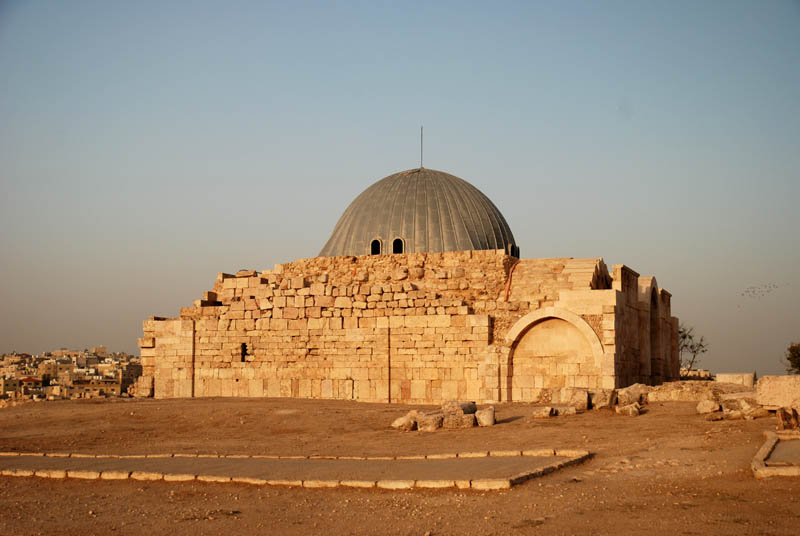
Umayyad Palace at the Amman Citadel
Other architectural remains include cisterns, walls and residential structures that show the urban and architectural evolution of the Citadel over the centuries. We close our visit to the Citadel by watching the sunset. The Citadel is also a perfect place to contemplate the views over the city. At its foot, among others, you can see the Roman theatre and, in the distance, the mosque of King Abdullah.
We ended the day with one of the best things to do in Amman: enjoy the food. We chose the Jafra restaurant, where we ordered arayes, lamb cooked in a kind of casserole that they break to serve you the food, hummus, etc. and a spectacular lemon with mint. Dessert was at the nearby Habibah, famous for its Kanafeh. These are strands of wheat dough (called kataifi or kunafa) that are baked until crisp and golden brown, filled with a white cheese that melts as it bakes. The whole thing is covered with a layer of crushed pistachios. You can't leave Amman without taste it.